Peaceful OS case study — Peaceful Media
← All workOur own house · Business Operating System

Peaceful OS

The operating system we run our own agency on, and now build for clients

  • 1 systemruns the whole agency, front door to invoice
  • 12modules, from pipeline to profitability
  • AIreads the numbers into ranked actions
  • 1 loginreplaces the disconnected SaaS stack
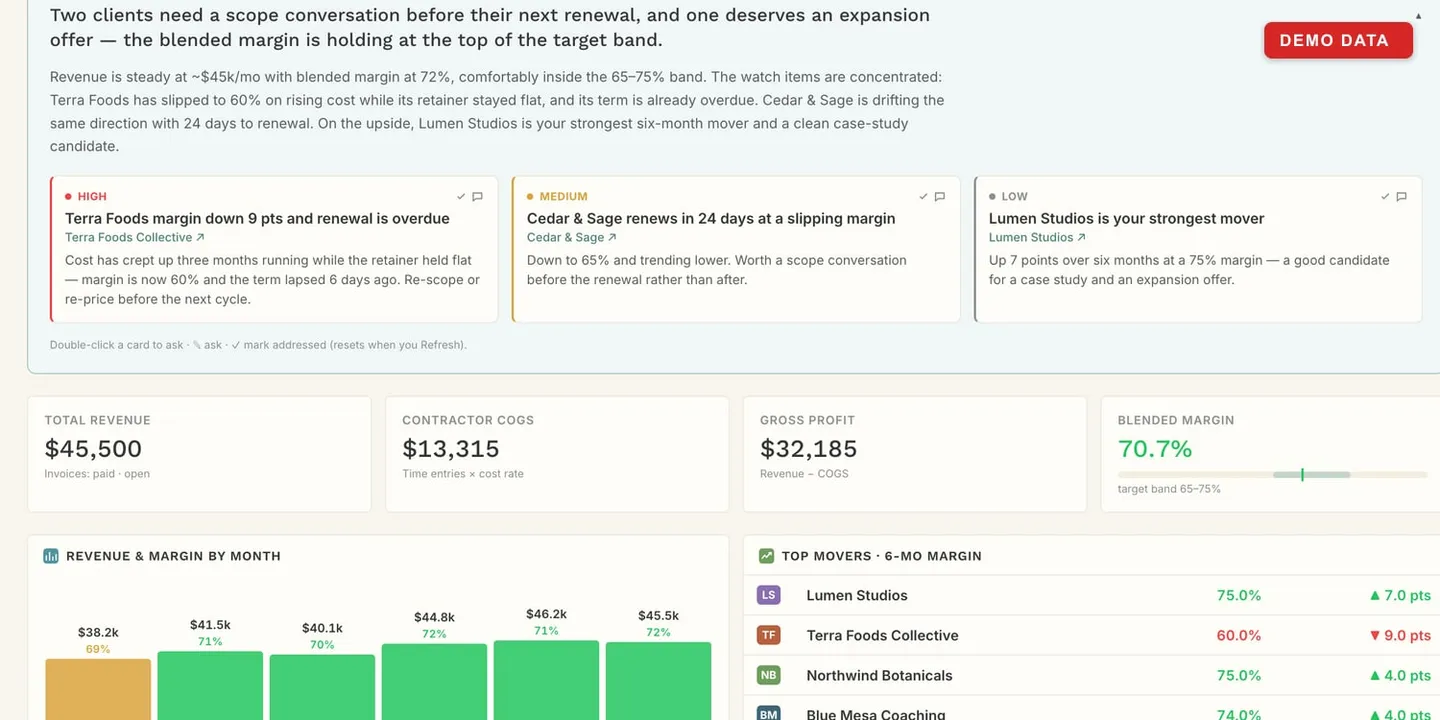
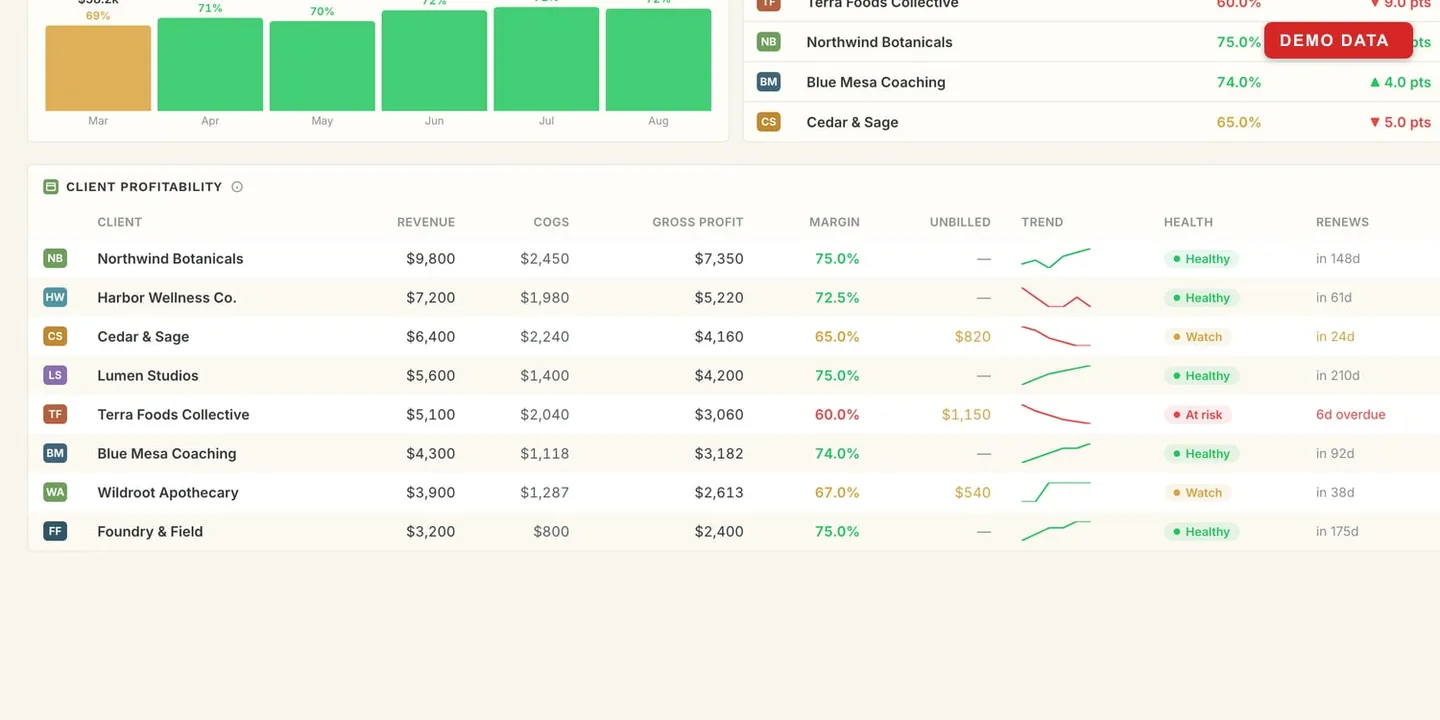
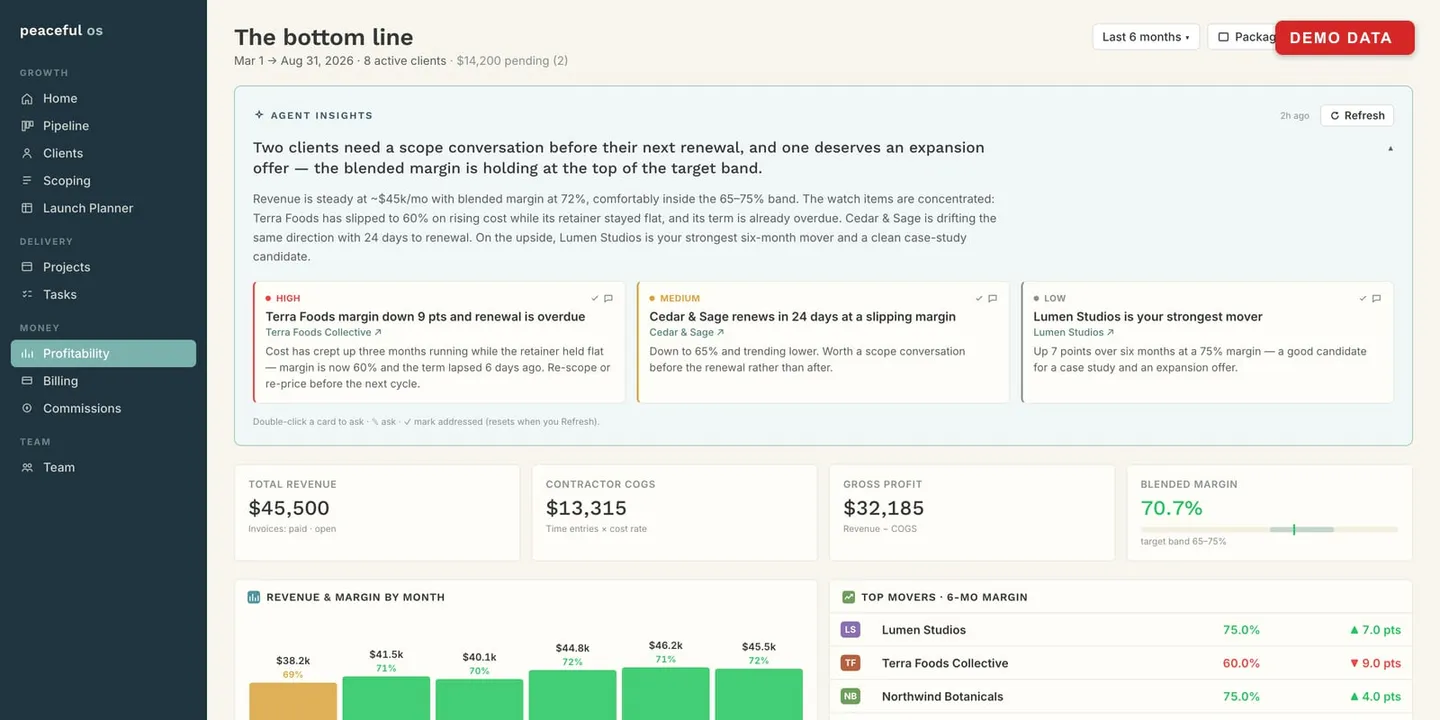
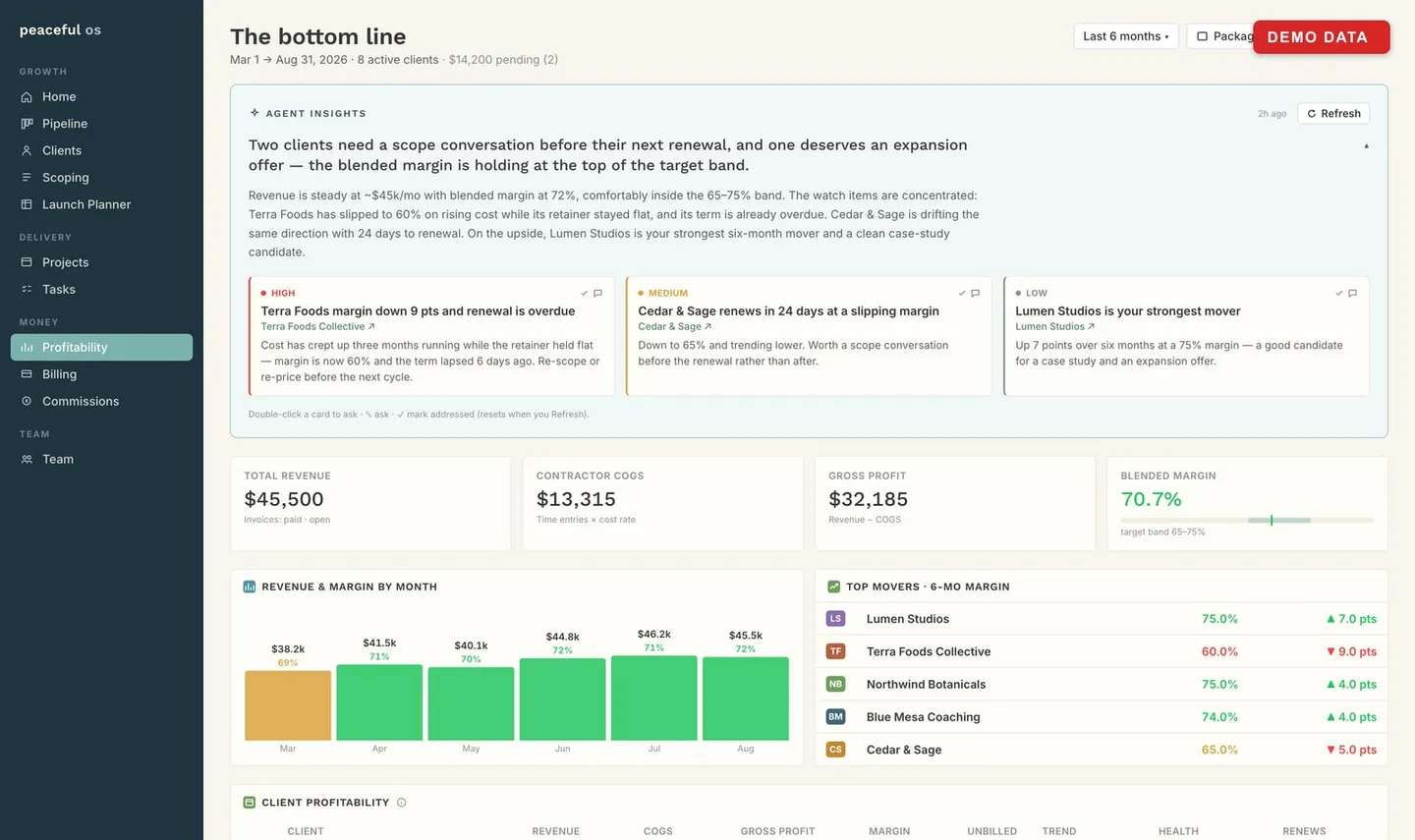
Peaceful OS, the 'bottom line' BI dashboard: an AI Agent Insights panel over revenue, cost, gross profit and blended margin, with a revenue-and-margin chart and a client profitability table (demo data).
The story

Peaceful OS is the operating system we built to run our own agency, and the reference build for the AI-driven dashboards and operating systems we build for clients. One system carries the work from first lead through scoping, proposals, projects, and billing to a live profitability dashboard, with an AI reading the numbers throughout.

Most agencies run on a CRM that doesn’t know what a project cost, time tracking that doesn’t know what was invoiced, and a spreadsheet reconciling them monthly. We folded all of it into one system, then added an AI that reads the real figures each period and ranks what needs attention: which client to re-scope before renewal, which margin is slipping, which account to grow.

The point: the model does the reading; a human owns the call. We run it ourselves, which is exactly why it’s an honest example of what we can build for you.

Every screenshot on this page uses demo data: fictional clients and illustrative numbers. A client’s real account is never shown in our portfolio.
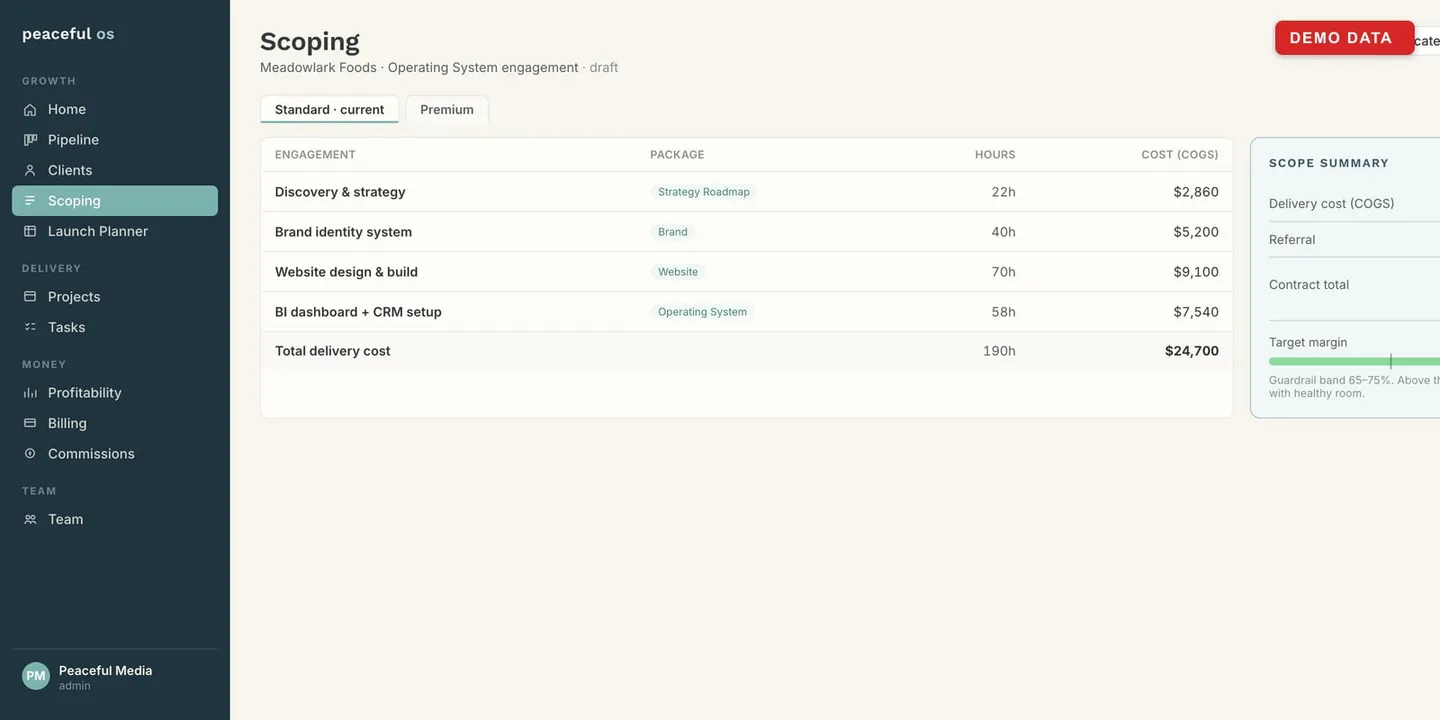
The scope builder: a discovery turned into a priced engagement, each deliverable costed, with a target-margin guardrail on the contract total (all figures are demo data).
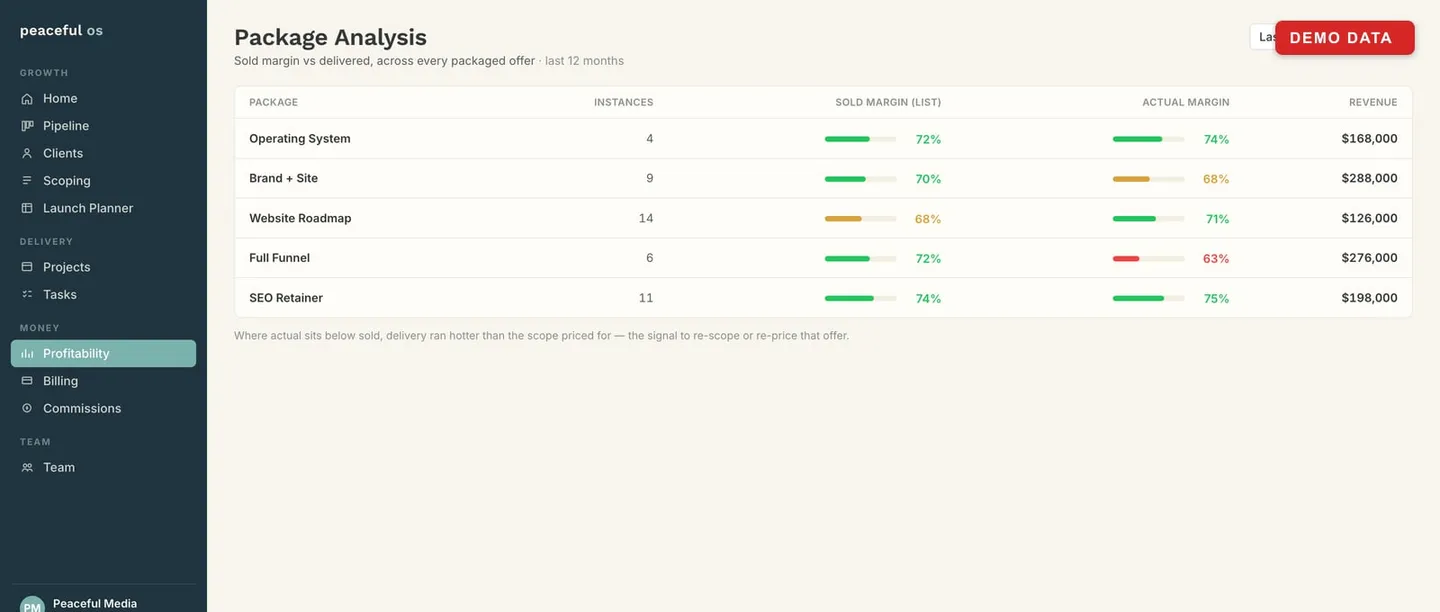
Package Analysis: sold margin versus delivered margin across every packaged offer, flagging the ones that ran hotter than they were priced (all figures are demo data).
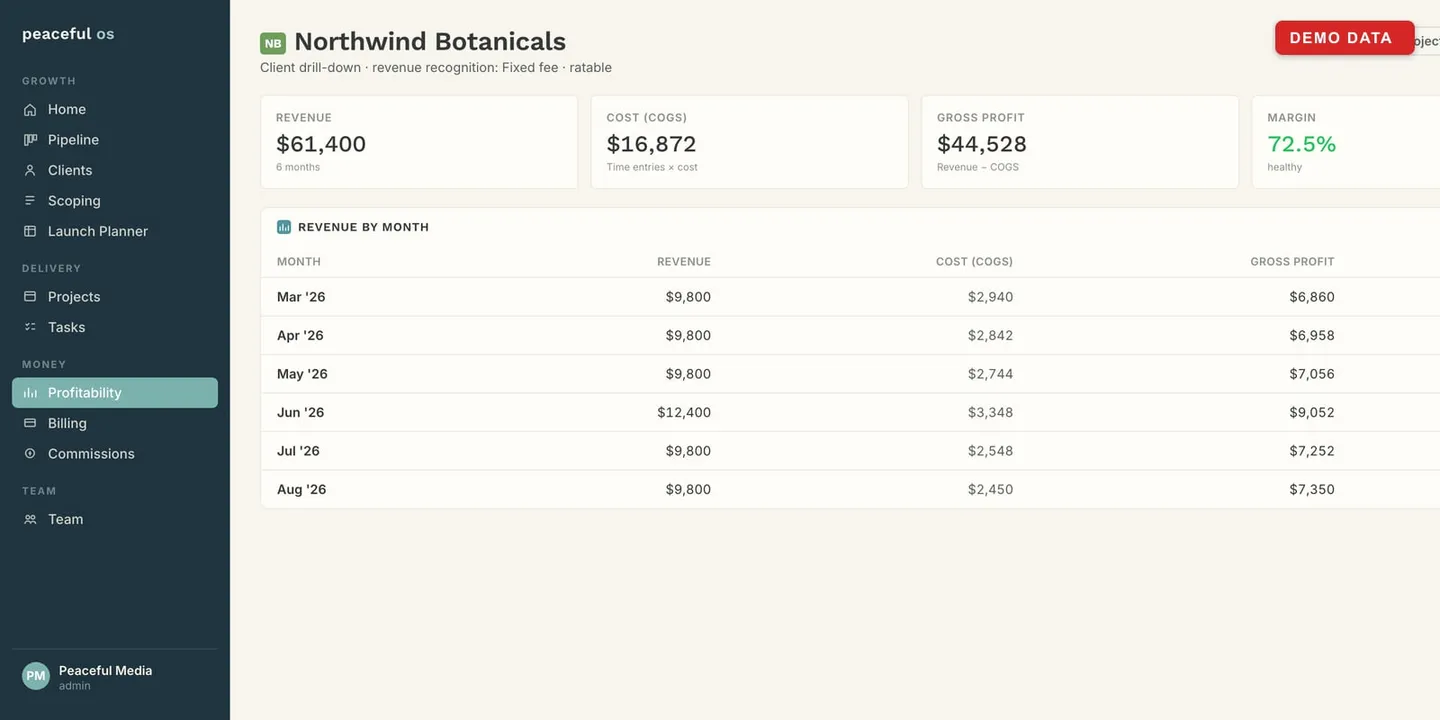
A client drill-down: one client's revenue, cost, gross profit and margin month by month, with a revenue-recognition toggle (all figures are demo data).
A few pieces from the work
The full story

Case study details

Why we built it, what it does, and what it proves about the AI systems we now build for clients.

Why we built our own

Like most agencies, we ran on disconnected tools: a CRM that didn’t know what a project cost, time tracking that didn’t know what was invoiced, and a spreadsheet reconciling them monthly. The numbers that mattered most (is this client profitable, is this margin slipping, is a renewal about to lapse) were the hardest to see.

So we built Peaceful OS, one operating system for the whole agency, from first inquiry to paid, profitable engagement. We run it every day, which makes it the honest example of the AI-driven operating systems we build for clients.

One system, front door to invoice

In an operating system, the modules share one spine, so work doesn’t fall between tools:

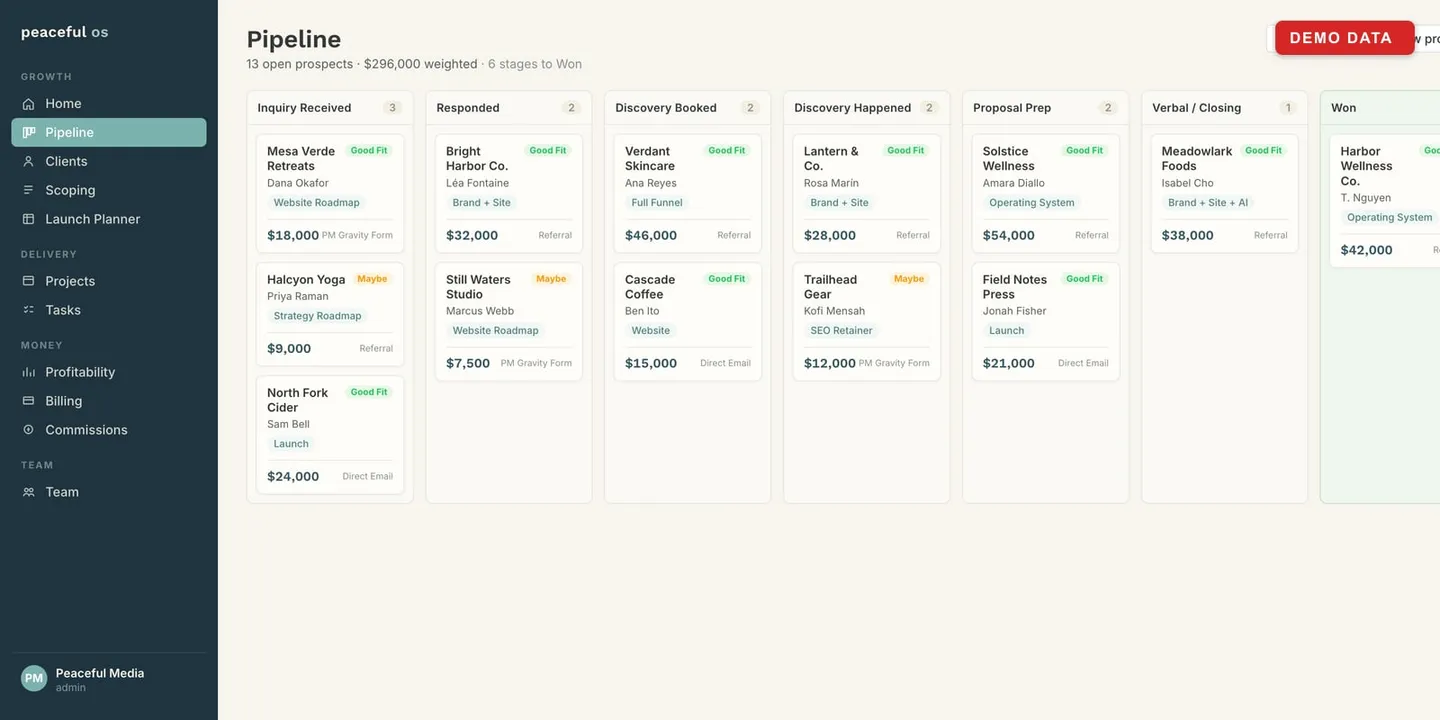
  • Pipeline & CRM. Inbound leads arrive automatically, scored for fit, and move from Inquiry Received through Responded, Discovery, Proposal Prep, and Verbal / Closing to Won. This isn’t a separate product; it’s the front of the same system that ends in the profitability dashboard.
  • Scoping & proposals. A discovery becomes a priced scope with a target margin baked in, then a proposal the client can accept at a private link.
  • Projects & delivery. Won work becomes projects and tasks, with the cost of delivery flowing back to the same client record.
  • Billing, commissions & packages. What was delivered becomes what’s invoiced, what’s owed to the team, and a running read on which packaged offers hold their margin.
The AI that reads the numbers

The reason this is our flagship AI systems case, not just an internal tool, is the layer on top of the data.

Every period, an AI model reasons over the real figures (revenue, cost, margin by client, trends, renewals) and writes a plain-language headline plus ranked, severity-coded action cards: this client’s margin is down nine points and its renewal is overdue; that one is drifting with 24 days to renewal; this one is your strongest mover and deserves an expansion offer. Double-click a card to ask a follow-up, or mark it addressed.

It follows our rule for every AI system we build: the model does the reading and the reasoning; a human sets the rubric and owns the decision. Every underlying number is still on the dashboard; the AI just keeps this week’s three priorities from staying buried in a table.

What it proves

When a client wants an AI-driven operating system (a BI dashboard that reads itself, a pipeline that feeds a real profitability view, an admin that runs it all), this is the reference build. We didn’t prototype it for a pitch; we run our business on it.

That’s the case for building your operating system with the team behind your strategy, brand, and growth: people who know where your business makes money can build the system that shows it to you, with an AI on top that tells you what to do about it.

Behind the scenes

What's inside the operating system

Peaceful OS isn't a dashboard bolted onto a CRM. It's one system that carries a client from first inquiry to paid, profitable engagement, with an AI reading the numbers throughout. Every screenshot uses demo data (fictional clients and numbers); we never show a real client's account. A few of the modules:

The pipeline kanban board.
01 the pipeline: every lead, one boardInbound leads land automatically from our forms and referrals, each scored for fit, and move stage by stage from Inquiry Received to Won: CRM and pipeline management, folded into the same system as everything downstream.
The Agent Insights AI panel.
02 an AI that reads the numbersEach period, an AI model reasons over the real figures and writes a plain-language headline plus ranked, severity-coded action cards: which client to re-scope before renewal, which margin is slipping, which account deserves an expansion offer. The model does the reading; a human owns the call.
The client profitability table.
03 profit per client, not just revenueRevenue is the easy number. The BI module joins invoices to logged cost so every client shows a true gross profit, margin against a target band, unbilled work, a six-month trend, and a renewal countdown: the things that decide whether the business is healthy.
The full bottom-line dashboard.
04 the whole business on one screenPipeline, delivery, and money live in one place, so the same team that wins the work can see what it earned. No exporting between a CRM, a spreadsheet, and an accounting tool that never quite agree.
Faithful recreations of the real product, with demo data