Michel Peruch case study — Peaceful Media
← All workExecutive Advisory · Business Performance

Michel Peruch

An AI business diagnostic at the front door of a full sales funnel

  • 7 daysto a full brand, site, lead-gen funnel, and custom CRM
Michel Peruch site design by Peaceful Media
The story

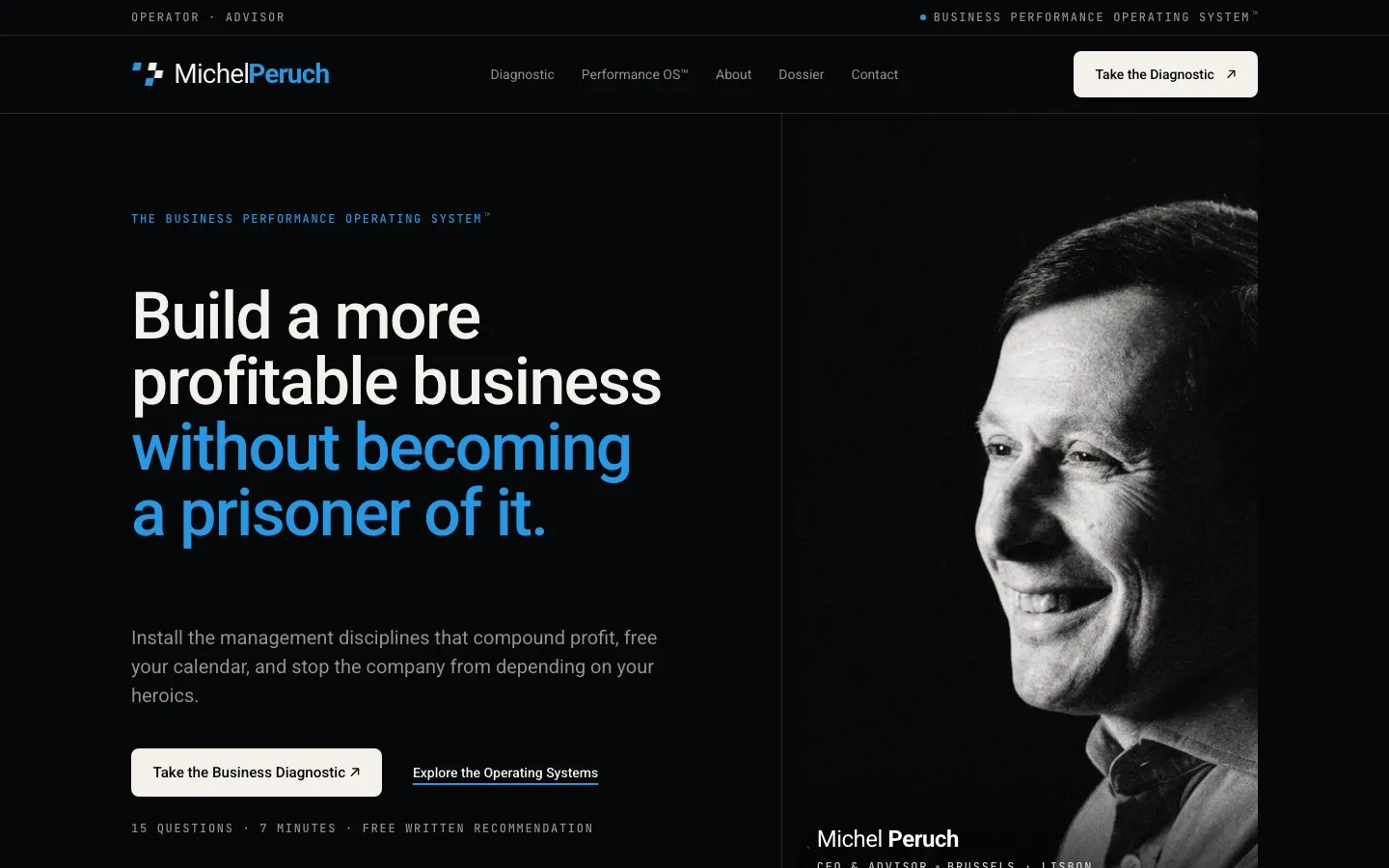
MichelPeruch.com is a brand and sales funnel for the Brussels- and Lisbon-based CEO advisor behind the Business Performance Operating System™, serving executives who run $5M–$50M businesses. The visual identity (a dark, blue-accented “operator, not consultant” system) came first; the site and funnel were built to carry it. The front door is a custom AI-driven diagnostic: fifteen questions, about seven minutes, and a written recommendation of which operating system the business needs next.

Behind it sits the machinery: a reporting tool that turns each assessment into a personalized document, a CRM pipeline that captures and stages every lead, email automations that carry prospects forward, and an admin for running it all.

The whole system (brand, website, lead-gen funnel, and custom CRM) went from nothing to live in seven days, at AI speed, without cutting the corners that make it feel bespoke.
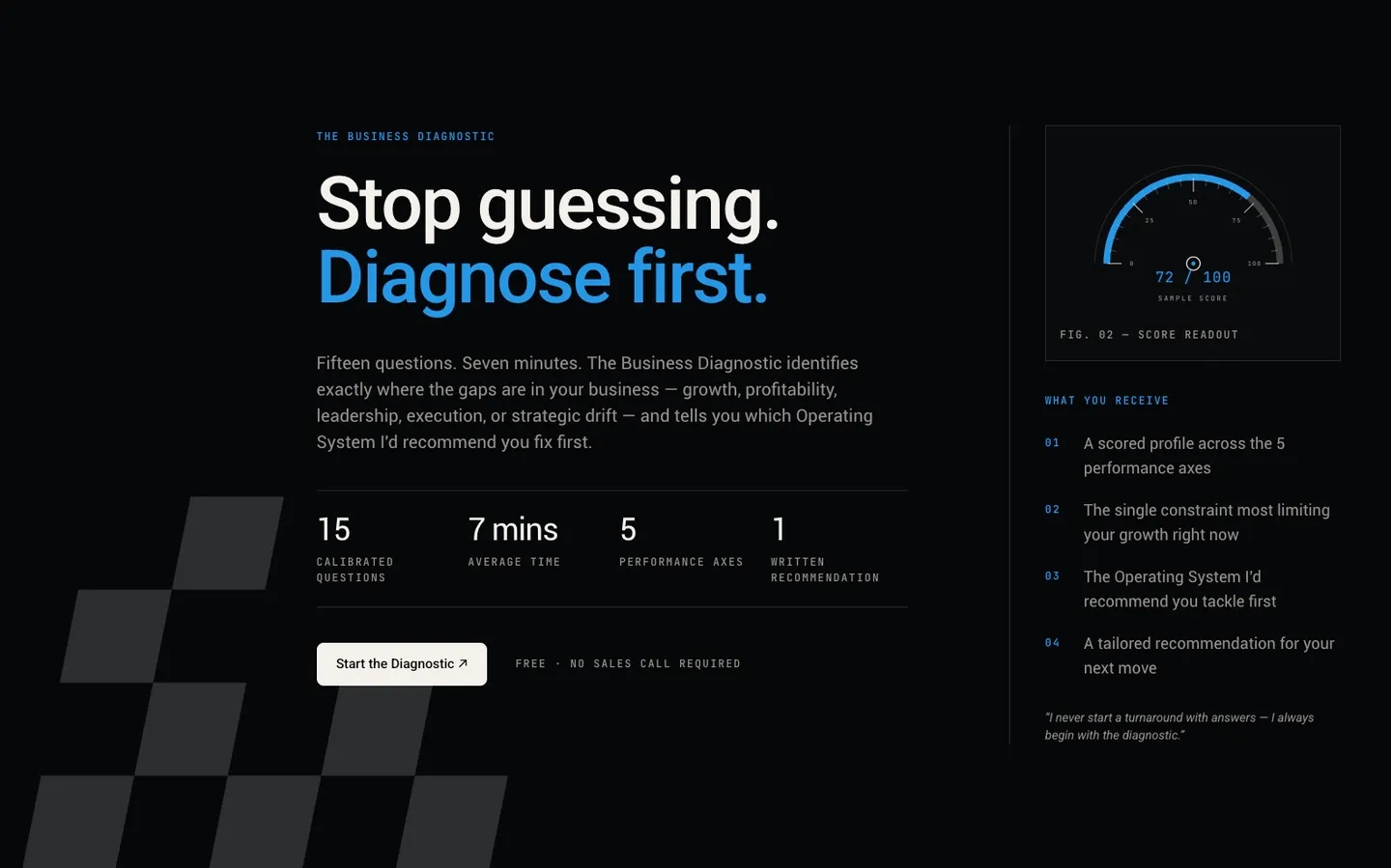
The homepage diagnostic pitch: "Stop guessing. Diagnose first." with a sample score gauge and what the assessment returns
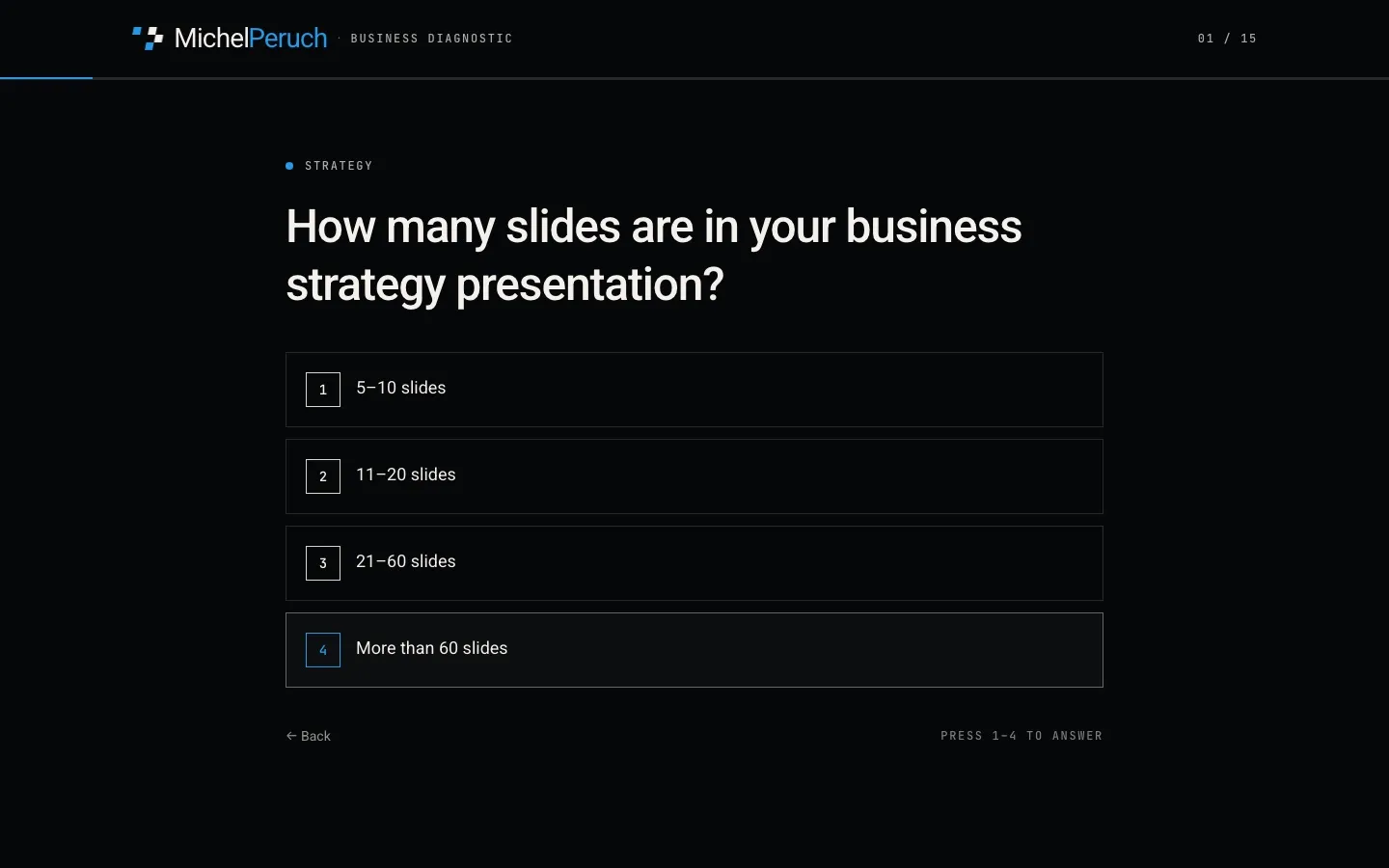
The live 15-question Business Diagnostic: a strategy question with keyboard-driven answer selection
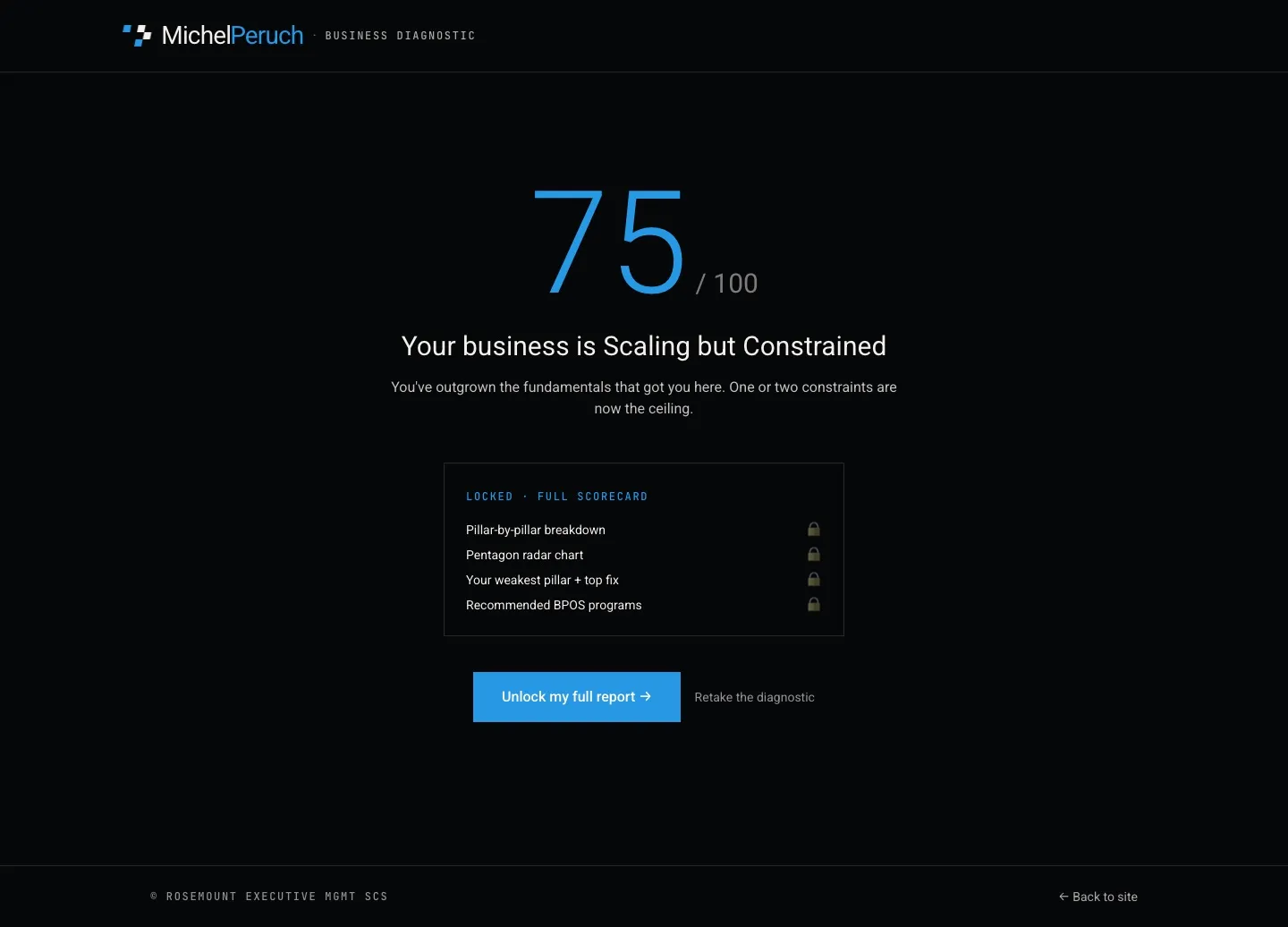
The instant diagnostic score screen: 75/100, "Scaling but Constrained," with the full scorecard locked behind Unlock my full report
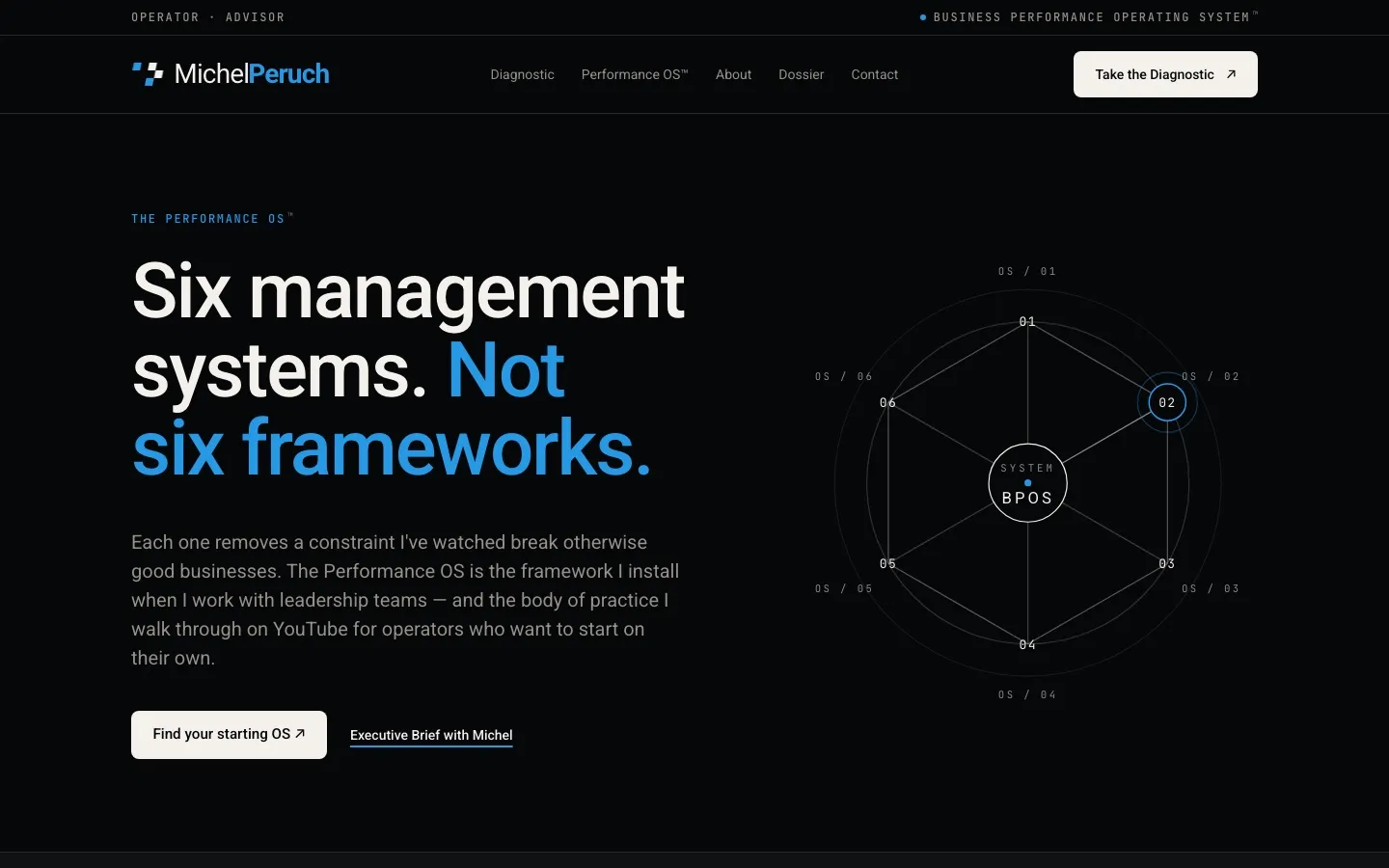
The Performance OS page, with six management systems mapped as a hexagonal BPOS constellation
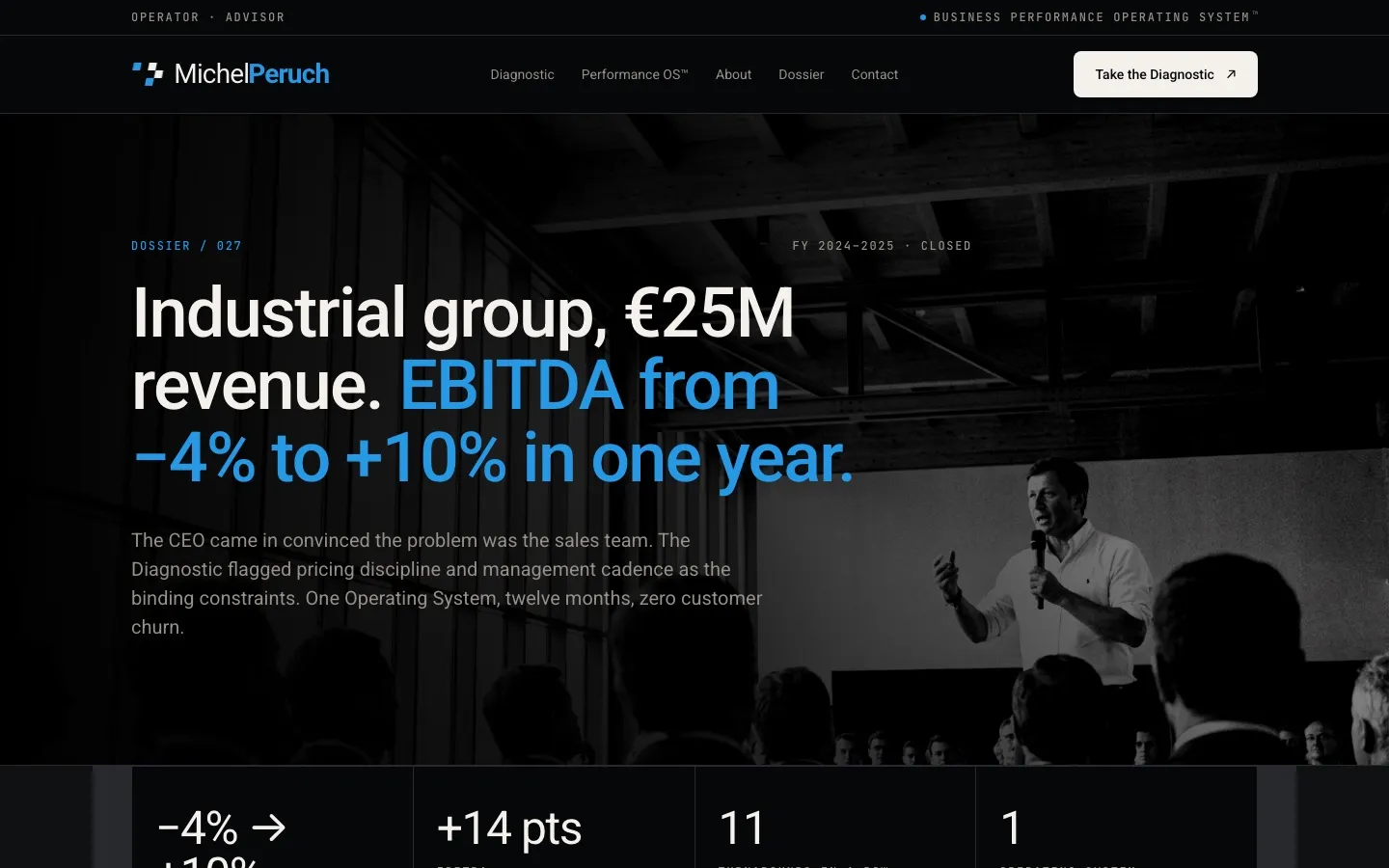
A Dossier case study: an industrial group's EBITDA swing from -4% to +10% in one year
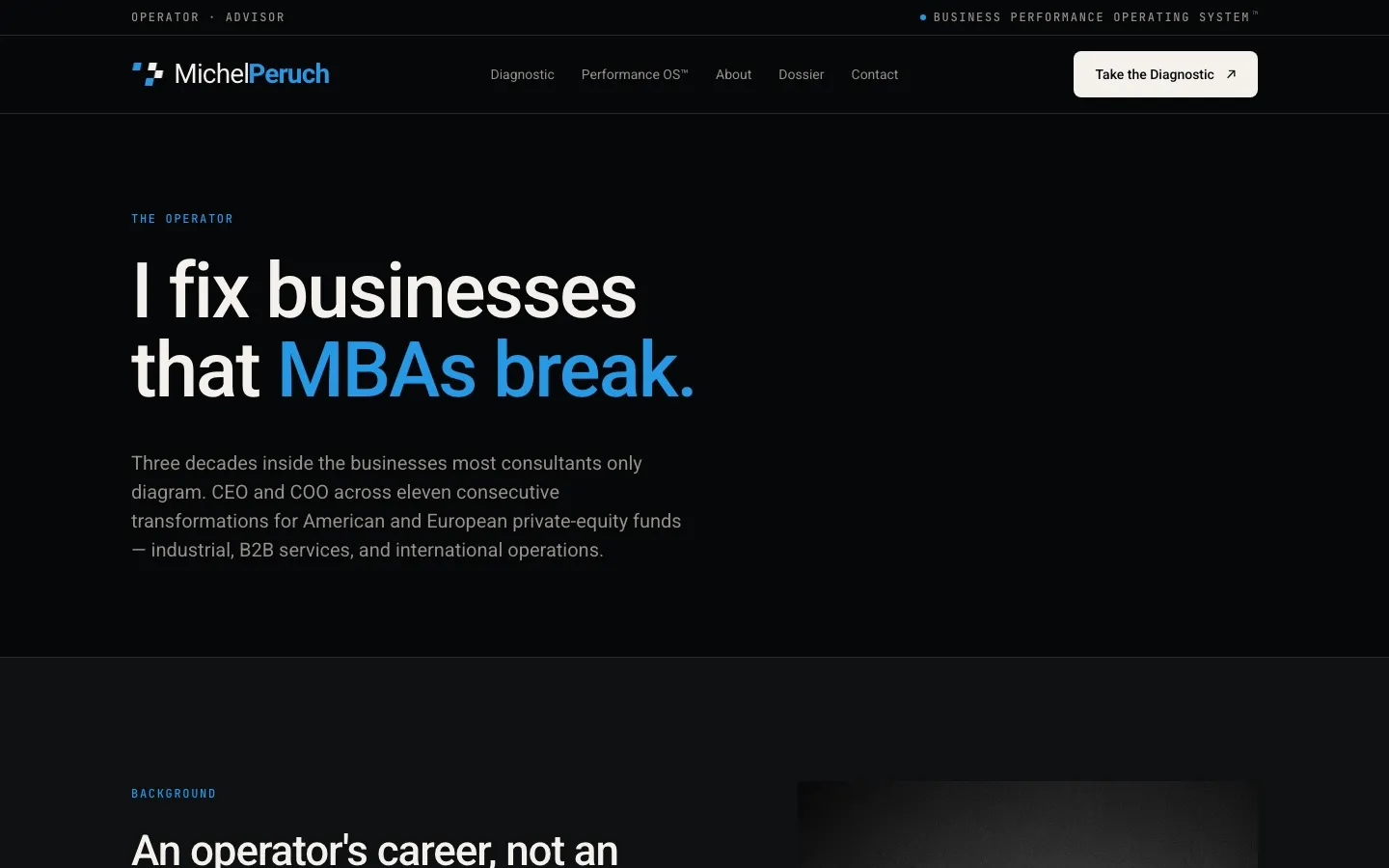
The About page: "I fix businesses that MBAs break"
A few pieces from the work
The full story

Case study details

The identity, the diagnostic at the front door, and the machinery behind it.

The brand

The visual identity came first. Its dark, blue-accented system is built on one clear position: operator, not consultant. The brand had to read like Michel himself: direct, senior, allergic to management theater.

The website and funnel carry that identity, down to the About page’s “I fix businesses that MBAs break.”

The diagnostic funnel

Instead of a brochure site, the front door is a custom AI-driven Business Diagnostic: fifteen questions, about seven minutes, keyboard-driven, built so a busy executive finishes it.

  • Submitting returns an instant score and profile (say, “Scaling but Constrained” at 75/100), with the full scorecard behind an unlock step that captures the lead.
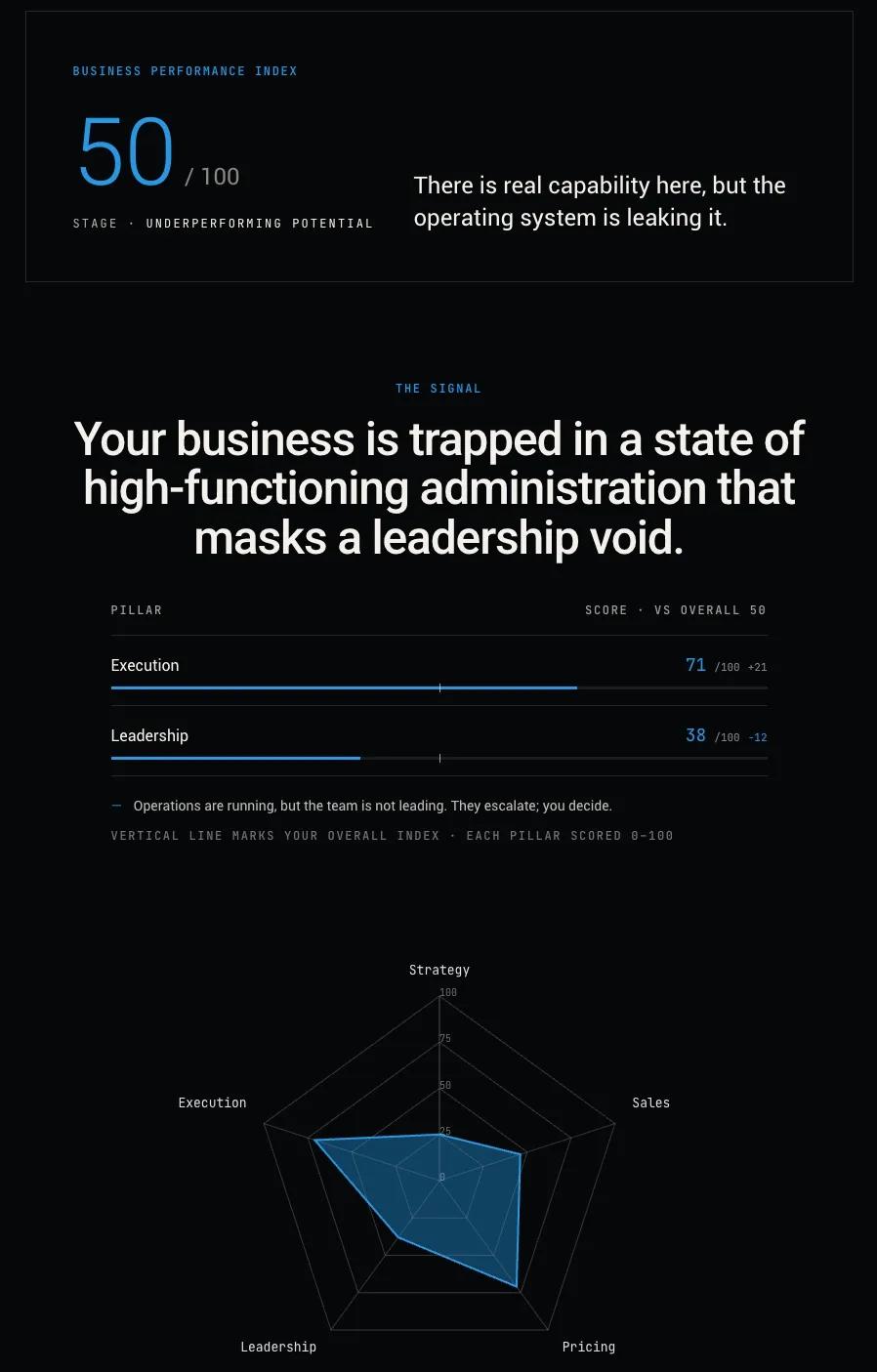
  • Each submission generates a written Executive Brief: a plain-English “signal” diagnosis, pillar-by-pillar comparison bars, and a radar chart. No two reports read the same.
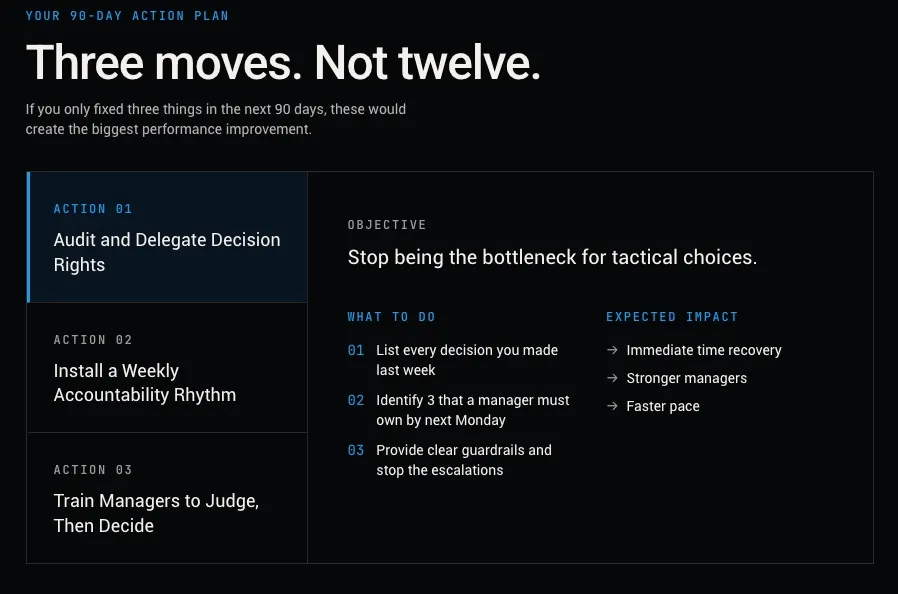
  • The report closes with a 90-day action plan of three prioritized moves (not twelve), each with an objective, what to do, and the expected impact, plus the recommended operating system to close the gap.
The machinery

Behind the diagnostic sits a complete lead-handling system, run from one admin:

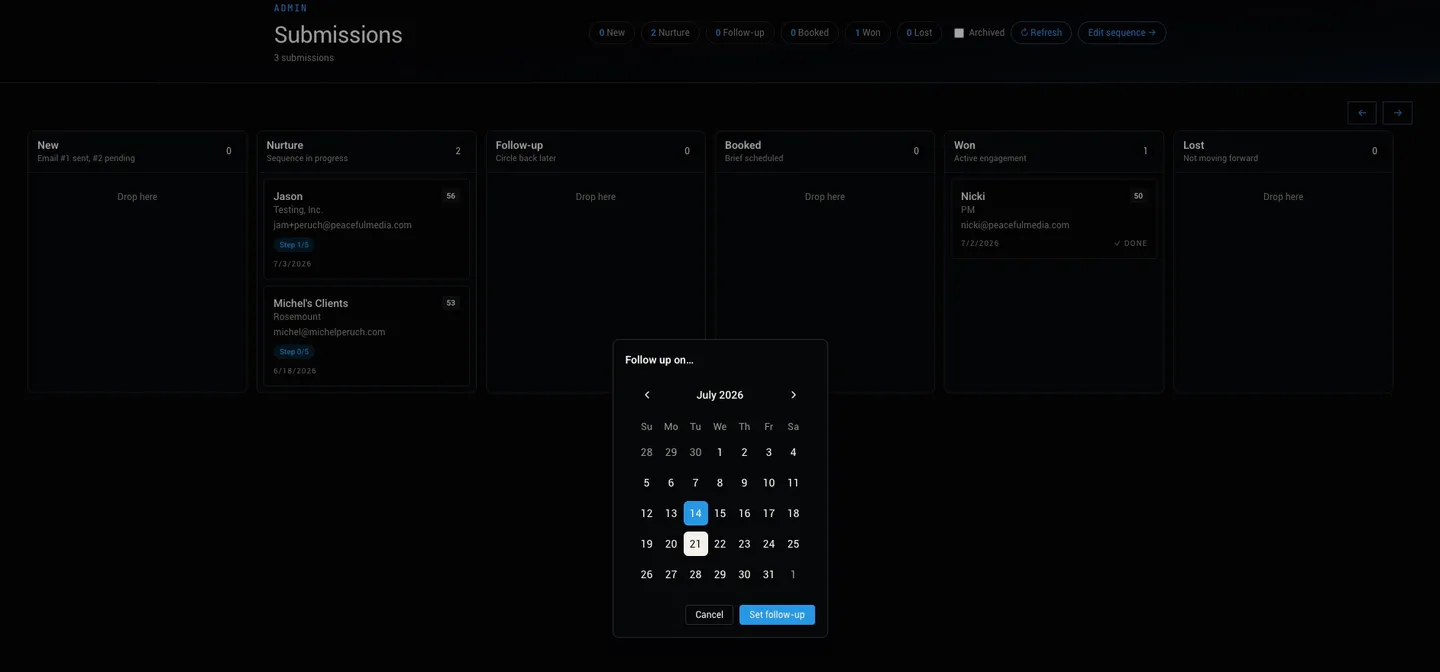
  • Every submission lands as a card in a six-stage pipeline (New, Nurture, Follow-up, Booked, Won, Lost), where dragging a card, setting a follow-up date, or pausing a sequence takes one click.
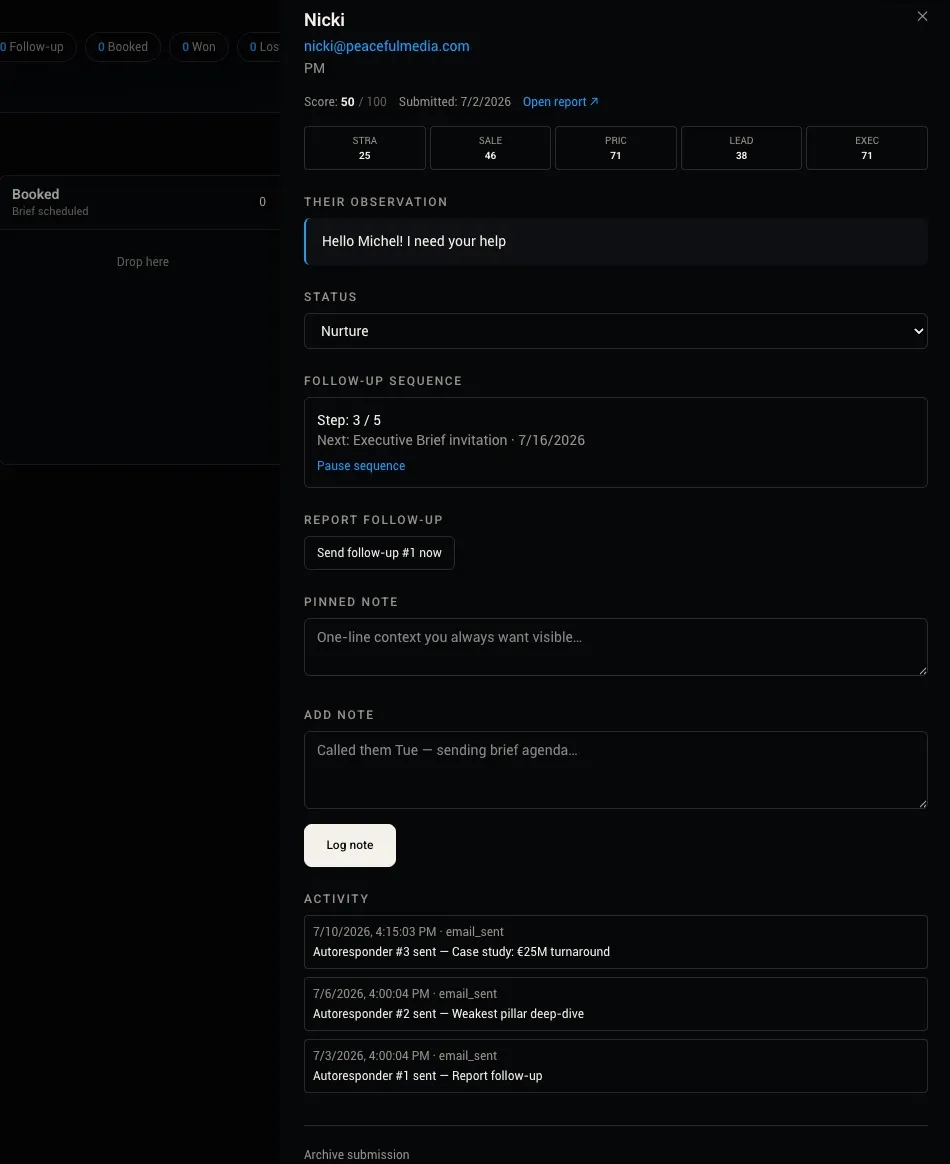
  • Clicking a card opens full context: pillar scores, the lead’s own written observation, their place in the follow-up sequence, and a timestamped log of every automated email.
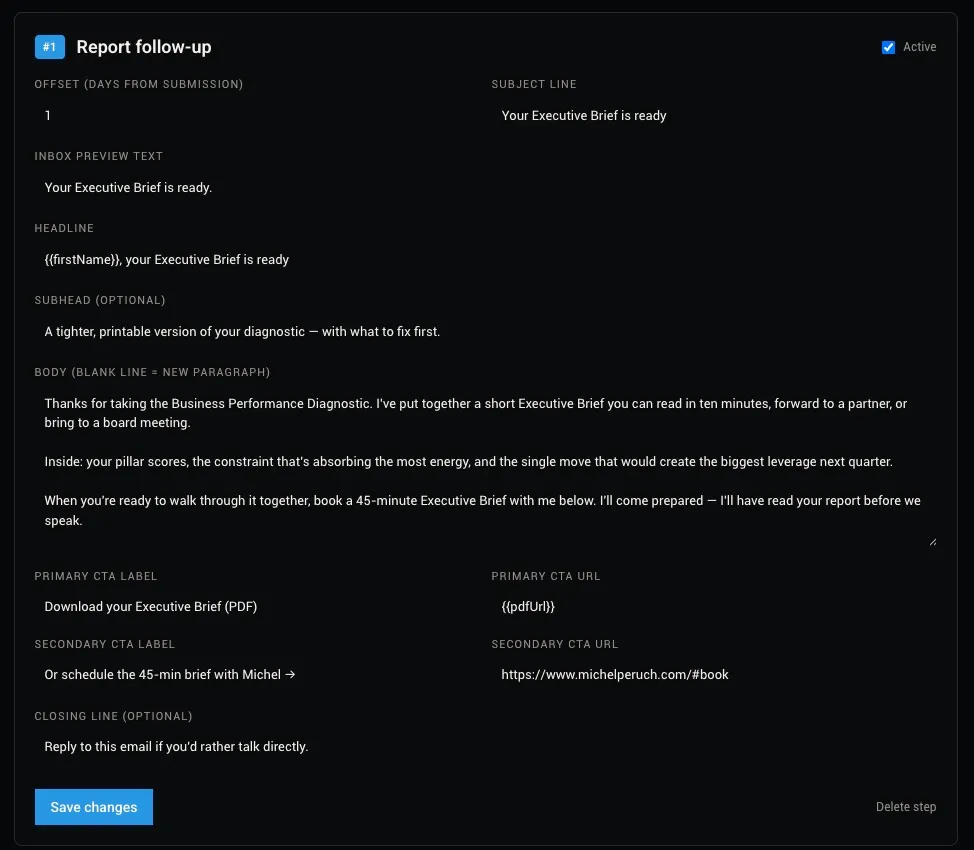
  • The follow-up emails (subject, headline, body, CTAs, send offset) are edited in the same admin. No separate email platform required.
Seven days

The whole system (brand, website, lead-gen funnel, and custom CRM) went from nothing to live in seven days, at AI speed, without cutting the corners that make it feel bespoke.
That’s the point: the team that shapes the positioning can now ship the whole machine that acts on it, in the time a traditional engagement spends on a kickoff deck.

Behind the scenes

The machinery behind the diagnostic

The quiz is the front door. Behind it, all run from one admin: an AI-written Executive Brief for each submission, a mini-CRM pipeline that stages every lead from New through Won, and email automations that carry prospects forward.

The AI-generated Executive Brief: a 50/100 score, a written diagnosis, pillar comparison bars, and a radar chart
01 the report, written per submissionEvery diagnostic answer set is scored and turned into a plain-English "signal" statement, pillar-by-pillar bars, and a radar chart. No two reports read the same.
The report's 90-day action plan: three prioritized moves, a recommended Operating System, and two paths to close the gap
02 three moves, not twelveInstead of a generic checklist, the report names the three prioritized actions that would move the needle most in the next 90 days, each with an objective, what to do, and the expected impact.
The admin pipeline board: a Kanban of submissions from New through Nurture, Follow-up, Booked, Won, and Lost, with a follow-up date picker open
03 a mini-CRM for the funnelEvery diagnostic submission lands as a card in a six-stage pipeline. Dragging a card, setting a follow-up date, or pausing a sequence takes one click.
A submission detail drawer: pillar scores, the lead's own observation, follow-up sequence status, and an activity log of autoresponder sends
04 full context on every leadClick a card to see the lead's scores, their own words, where they sit in the follow-up sequence, and a timestamped log of every automated email sent.
The autoresponder editor: subject line, headline, body, and CTA fields for a timed follow-up email step
05 the follow-up sequence, editableEach automated email (subject, headline, body, CTAs, send offset) is edited from the same admin. No separate ESP required.
Actual pages from the working files, not mockups