We get asked this constantly: which camera should I actually buy? Here is the honest, tier-by-tier answer, plus a warning at the end about the thing that matters more than the camera.
The short answer: the Sony ZV-E10 II
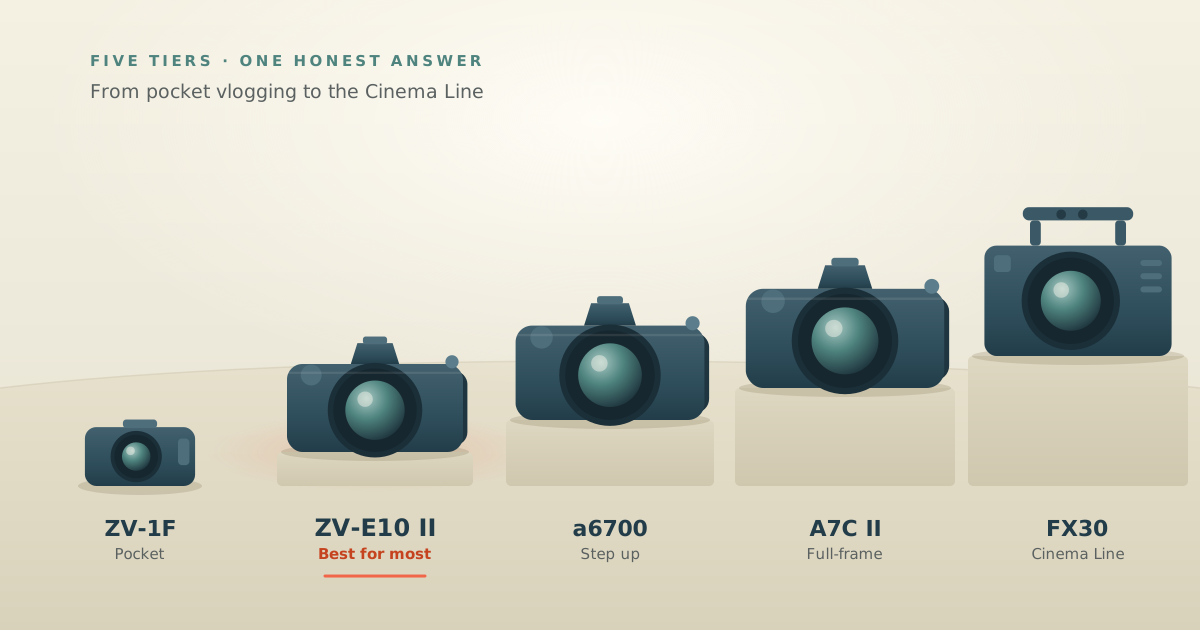
For most content creators today, the Sony ZV-E10 II is the best overall choice. It features a 26MP APS-C sensor, 4K 60p video, and industry-leading AI autofocus, all in an ultra-compact body. It retails for roughly $1,000 body-only (a little more with the 16-50mm kit lens), and it uses Sony’s larger NP-FZ100 battery for meaningfully longer shooting sessions (DPReview, B&H).
The 4K 60p is oversampled from 5.6K, which is why the footage holds up better than the spec sheet suggests. For a creator publishing to YouTube and social, this is the sweet spot: enough camera to look professional, small enough that you will actually bring it.
Choosing the “best” beyond that depends on your niche and workflow. Every pick below is listed with a buying link in where to buy, at the end.
1. Best step up without going full-frame: Sony a6700
If the ZV-E10 II is the right camera but you want one you can grow into, the a6700 is the move. It runs the same 26MP APS-C sensor class, then adds the two things the ZV-E10 II leaves out: in-body stabilization and a viewfinder. DPReview is blunt about both on the ZV-E10 II: “there’s no in-body stabilization in the camera,” and its viewfinder is listed as none (DPReview).
Those two gaps are exactly what you feel the moment you shoot away from a desk: handheld footage that wants a gimbal, and a rear screen you can’t read in daylight.
The video spec steps up too: 4K up to 60p oversampled from 6K, 4K/120 with a 1.58x crop, 10-bit 4:2:2, S-Cinetone and S-Log3, and uploadable LUTs so the look you built in post can live on the camera. DPReview gave it a Gold award at 88% (DPReview).
It runs roughly $1,400 body-only, sitting between the ZV-E10 II and the A7C II. The 16-50mm kit costs more and is the version we’ve linked below: worth it if you don’t already own glass, skippable if you do.
Pick this if you’ve outgrown a vlogging body but don’t need full-frame. Where to buy the a6700.
2. Best hybrid & travel: Sony A7C II
If you want a lightweight, compact body with a full-frame sensor, the A7C II takes the internals of the professional A7 IV and shrinks them into a travel-friendly form factor. It is excellent for dynamic vlogging and photography, with a 33MP full-frame sensor in a body around 514g (B&H comparison). Typically priced around $2,199.
Pick this if you shoot as much photography as video and you travel with your kit. Where to buy the A7C II.
3. Best professional video & filmmaking: Sony FX30 (or FX3)
For serious filmmakers, the FX30 is the ideal, affordable entry point into Sony’s Cinema Line. Priced at roughly $1,800, it shares the same 26MP APS-C sensor as the ZV-E10 II but adds built-in cooling fans for unlimited recording, professional XLR audio via the handle, 4K up to 120fps, and a rugged, cage-ready body (DPReview).
If you require full-frame, step up to the Sony FX3 (roughly $4,000).
Pick this if you are shooting client work, long interviews, or anything where a camera overheating mid-take is unacceptable. Where to buy the FX30.
4. Best pocket & vlog starter: Sony ZV-1F
For casual creators, or anyone stepping up from a smartphone, the ZV-1F is affordable and dead simple. At roughly $500, it features a fixed, ultra-wide 20mm lens and a flip screen, making it an accessible vlogging and streaming companion.
There are no lenses to agonize over. That is the point: it removes the excuses between you and publishing. Where to buy the ZV-1F.
The thing that matters more than the camera
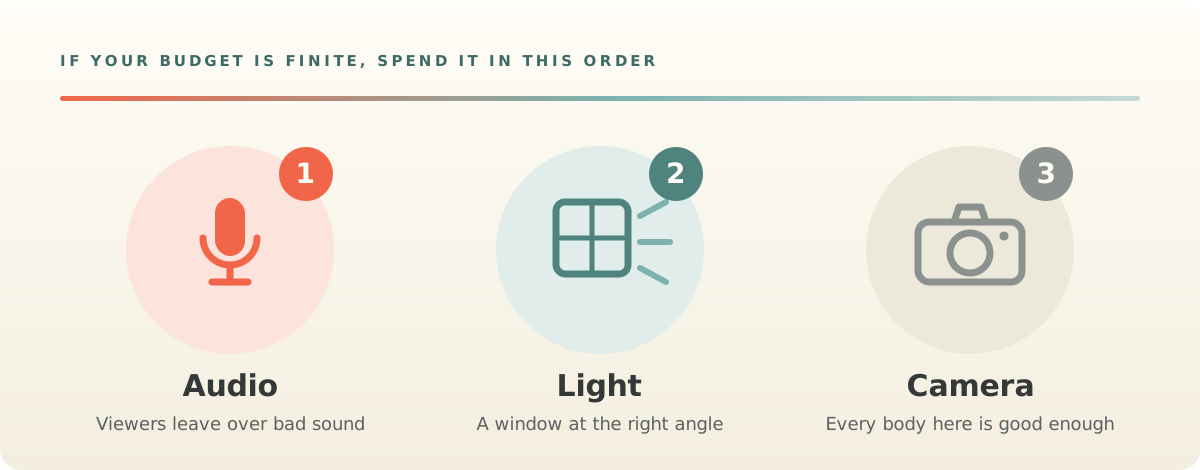
Every camera above will make you look good. None of them will save bad audio or a dark room.
If your budget is finite, spend it in this order: audio, then light, then camera. A modest body with a clean microphone and a window at the right angle beats an expensive sensor in a dim office with echo, every time. Viewers tolerate imperfect footage; they leave over bad sound.
And the real constraint is almost never gear. It is a repeatable system for actually producing. That is why we run monthly batch shoots with clients, and interview-format sessions for anyone who freezes at a blank camera: we ask the questions, you just talk. That is how our video and YouTube work runs: a month of content shot in a day or two, then cut into long-form, Shorts, and social.
Sources
- DPReview: Sony ZV-E10 II in-depth review
- B&H Photo: Sony ZV-E10 II
- Wikipedia: Sony ZV-E10 II
- DPReview: Sony a6700 review (Gold, 88%)
- B&H: Sony A7C II vs FX30
- DPReview: Sony a7C vs FX30
Prices are rounded ballparks of US street prices at the time of writing, meant to show low, middle and high, and are subject to change. Check a current retailer before buying.